
Trying the local food is one part of travel that I’m always excited about, and in this guide you’ll find my favourite traditional Egyptian foods and top dish recommendations that you really must try!
Egypt is a feast for the senses and the cuisine is no different!
Most of Egypt’s traditional dishes have been eaten for thousands of years and are built around humble, seasonal, everyday ingredients like beans, rice, lentils, herbs and fresh bread, which results in every dish having a cosy, homemade feeling.
From slow-cooked stews to crispy fried street food, Egyptian cooking is simple but always satisfying. The food culture includes very generous portions and communal dishes, and eating your way through the country is one of the best ways to experience it!
Before visiting, I couldn’t name a single Egyptian dish, which is surprising considering most of these traditional dishes like foul, aish baladi and molokhiya have been eaten in Egypt for thousands of years. And they deserve far more attention than they get!
Having visited Egypt more than ten times now, I’m still discovering new dishes and here I’m going to share my favourite 12 dishes that you should definitely try on your trip.
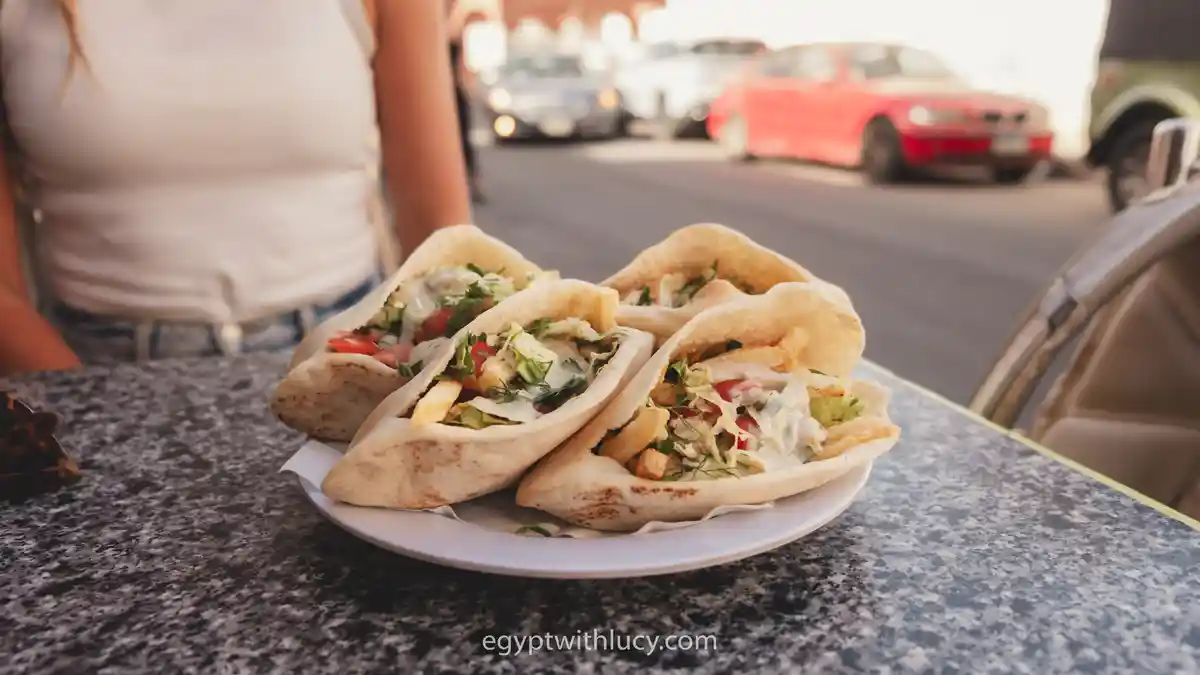
My Experience Trying Traditional Egyptian Cuisine
On previous family holidays to Egypt I can’t say I sampled much local food, as I was never adventurous at the resort’s all-inclusive buffet.
However, this changed when Sam and I arrived in Cairo with our backpacks on for the first time, as we set about trying local dishes as well as seeing the sights.
Our first night took us to the famous Abou Tareq as we had to start with the national dish, koshary.
But soon we were eating street-side ta’ameya sandwiches (Egypt’s own version of falafel) in Luxor, discovering a real Egyptian breakfast spread in Alexandria, picking up freshly baked aish baladi (Egyptian bread) everywhere we went, filling up on barbecue meat platters in Dahab.
Every time I sat down to eat, whether that was on a bustling street corner or on a rooftop overlooking the Nile, it was never just one plate of food. It was always a huge spread. Dishes arrived in abundance, including salads, soups, flavour-packed dips and towering piles of aish baladi, the delicious flatbread that appears at virtually every Egyptian table.
I quickly learned that traditional Egyptian dishes are simple and incredibly satisfying after a long day of busy sightseeing.
And each time I’ve come back in recent years I’ve tried more and more of the food. Even molokhiya, which is a green soup I’d always passed on but found that it tastes much better than it looks!
My 12 Favourite Traditional Egyptian Dishes You Need To Try
Starting with the undisputed king of all Egyptian food, here’s the list of food to try in Egypt that you need!
The first 10 are all savoury dishes while the final two are simple but tasty desserts.
1. Koshary
Every time I asked an Egyptian what their favourite dish was, they all gave the same answer:
Koshary!
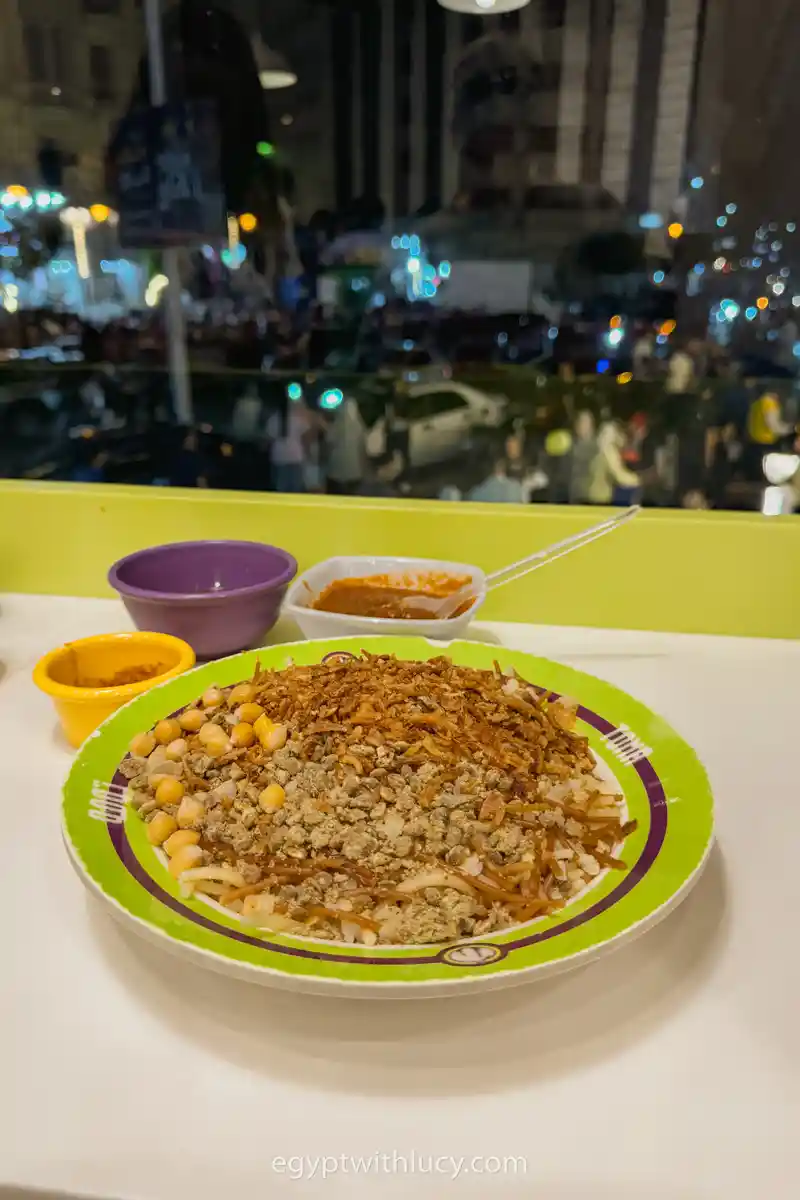
It’s Egypt’s national dish and is filling, super cheap, and readily available in every neighbourhood from either a street cart, a dedicated koshary restaurant, or an Egyptian fast food place.
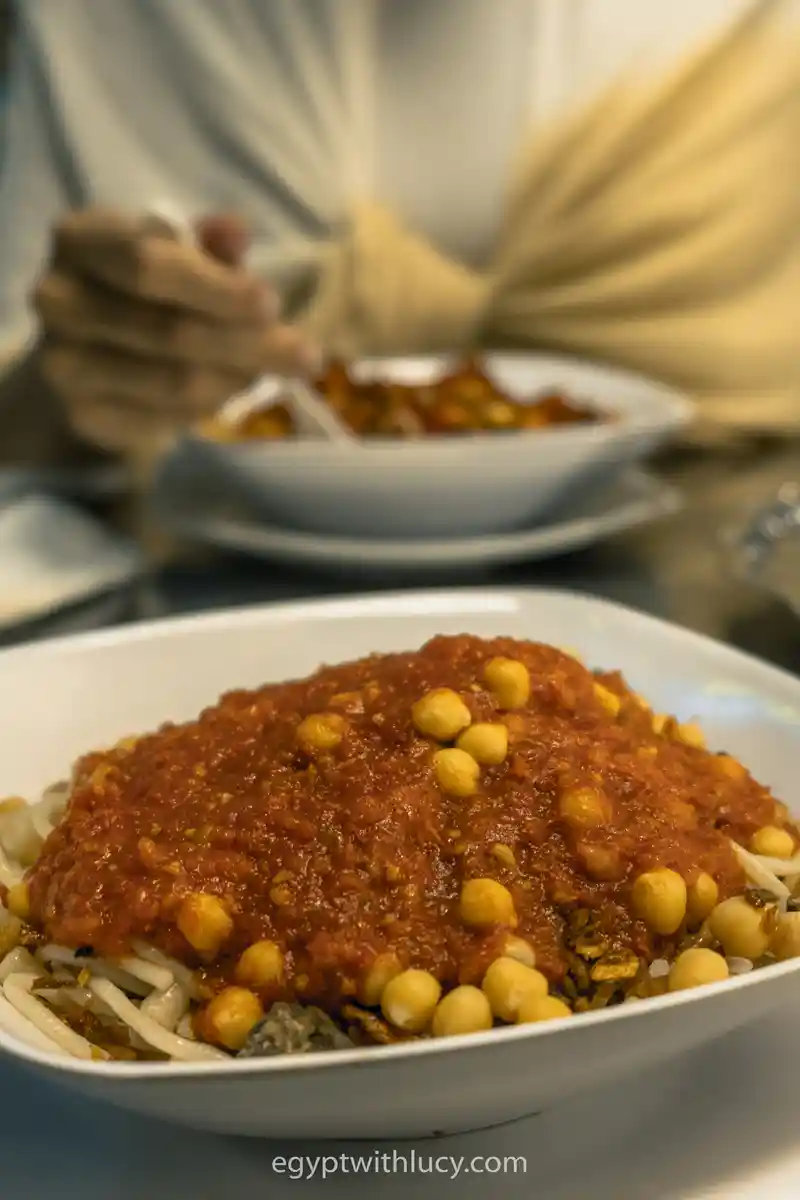
This carb-heavy meal is made with layers of basic and affordable ingredients, including pasta, rice, spaghetti, lentils, chickpeas, tomato sauce, crispy fried onions, and you can add as much garlic vinegar and chilli sauce as you can handle.
At first I thought it sounded like a strange combination of ingredients, but trust me, it works really well together and never disappoints! It’s a fantastic filling meal or a great quick snack as the ingredients are all pre-cooked and ready to be assembled.
So if you’re looking for something cheap, quick and delicious to try then I highly recommend a bowl of koshary!
Lucy’s Recommendation: If you’re in Cairo, then check out Abou Tareq in downtown for my all-time favourite koshary restaurant!
2. Tamiya/ Ta’ameya (Egyptian Falafel)
It might not be the healthiest food, but delicious is exactly how I’d describe Egyptian falafel!
And no trip to Egypt is complete without trying it.
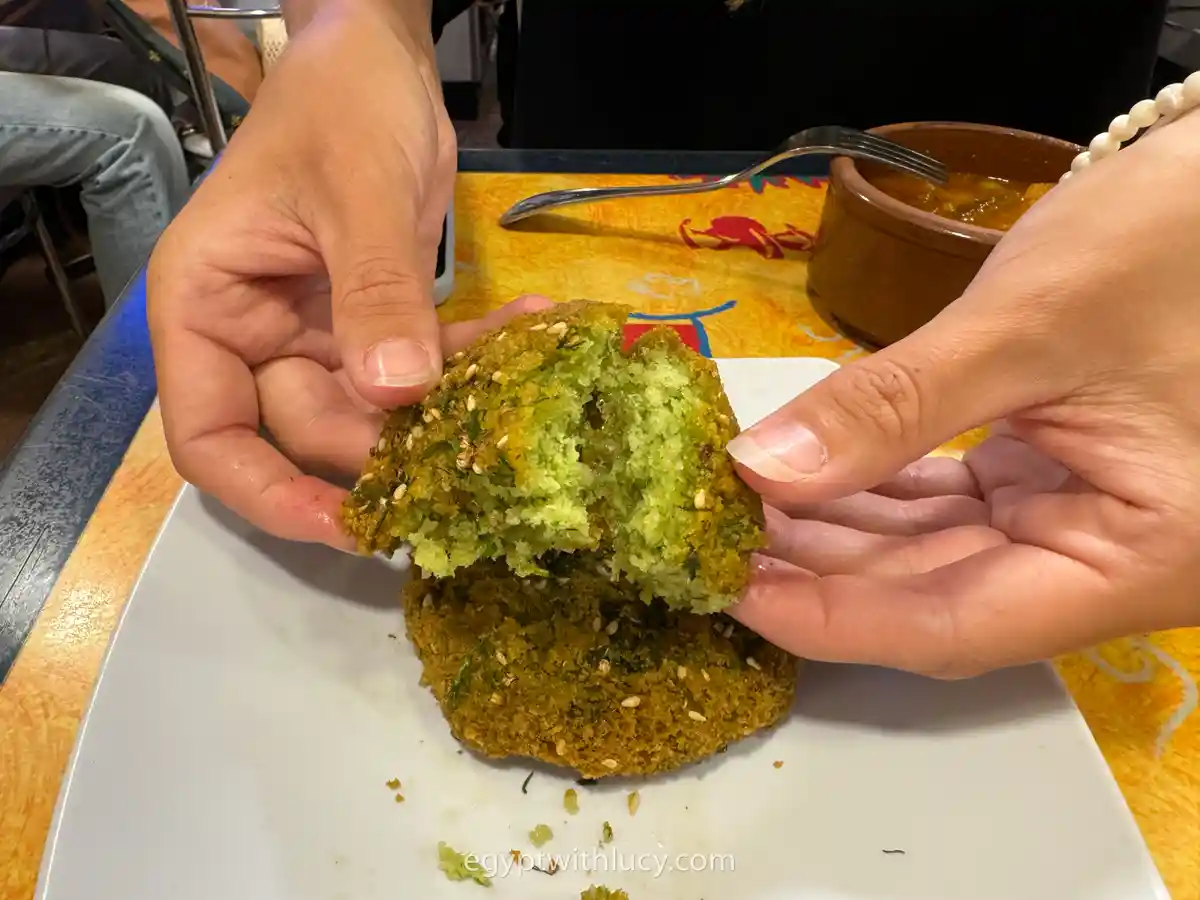
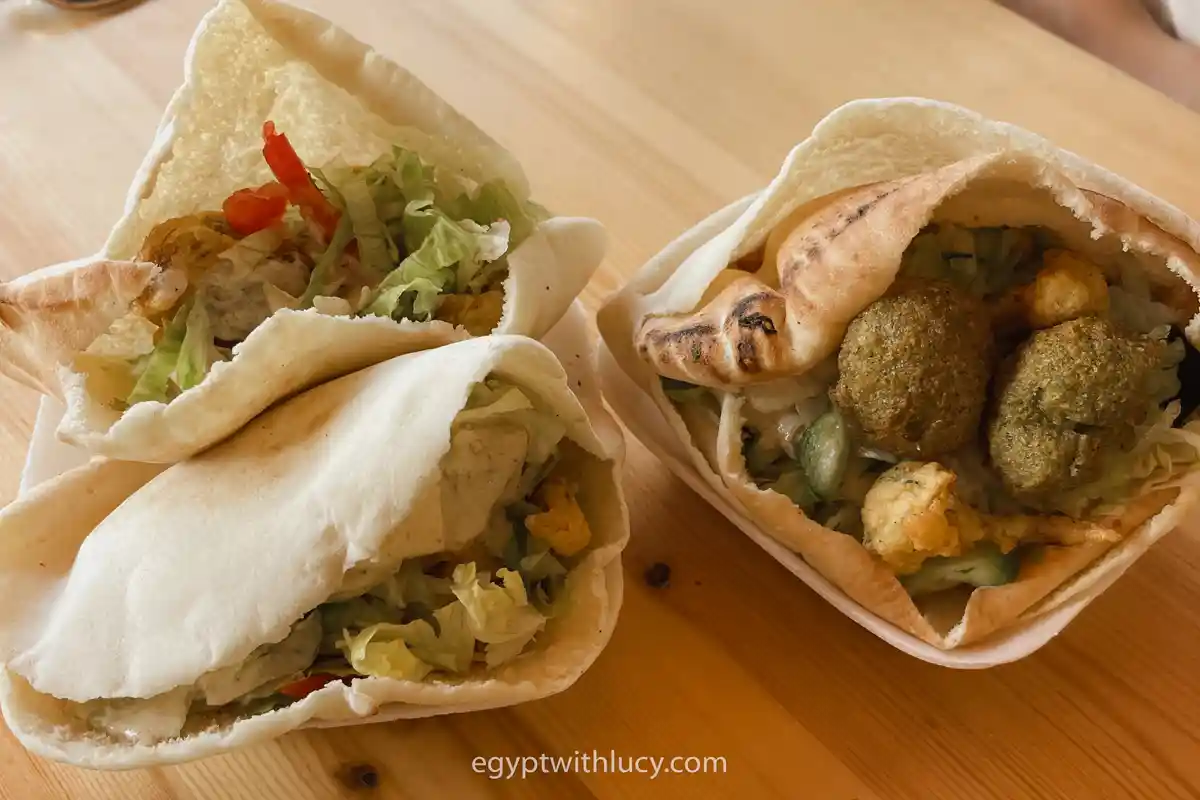
Instead of being made from chickpeas, the Egyptian version is made from green fava beans along with some herbs like fresh coriander and fennel seeds. I remember the first time I tried Egyptian falafel and I was shocked by the bright colour when I first bit into one!
My favourite ways to eat these crispy and deep-fried flat discs are part of a breakfast platter or stuffed in a sandwich covered in tahini and salad.
I’ve been converted and now I definitely prefer it to regular falafel as it tends to hold more moisture and have more flavour.
I also love that every vendor has their own take on the classic recipe, so every falafel tastes slightly different.
You can find tamiya sold absolutely everywhere, from street vendors to restaurants. Just look out for the large pots of boiling oil on the side of the street and you’ll find fresh falafel!
I ate falafel sandwiches almost every day during my first backpacking trip to Egypt, as it makes a quick, cheap, filling and fairly healthy lunch on the go with prices starting at 15 EGP (0.20 USD) for one!
3. Egyptian Breakfast
Egypt really knows how to make a great breakfast platter!
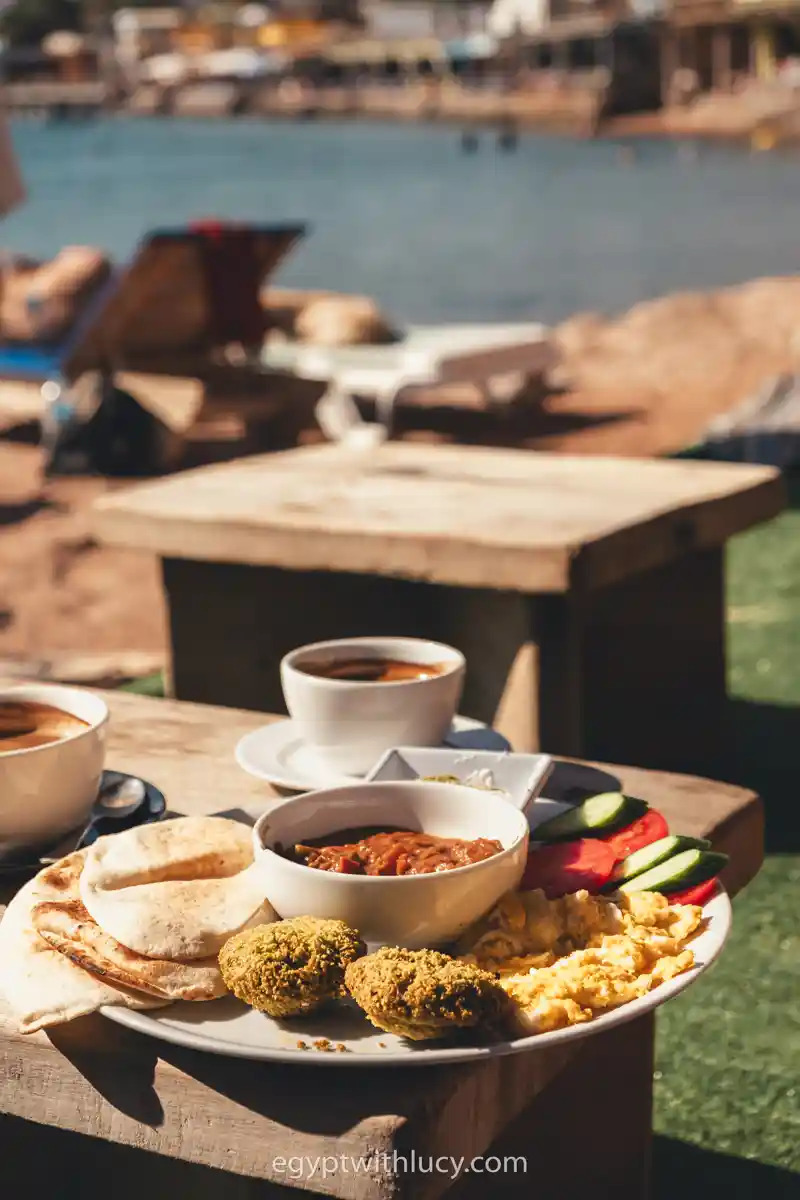
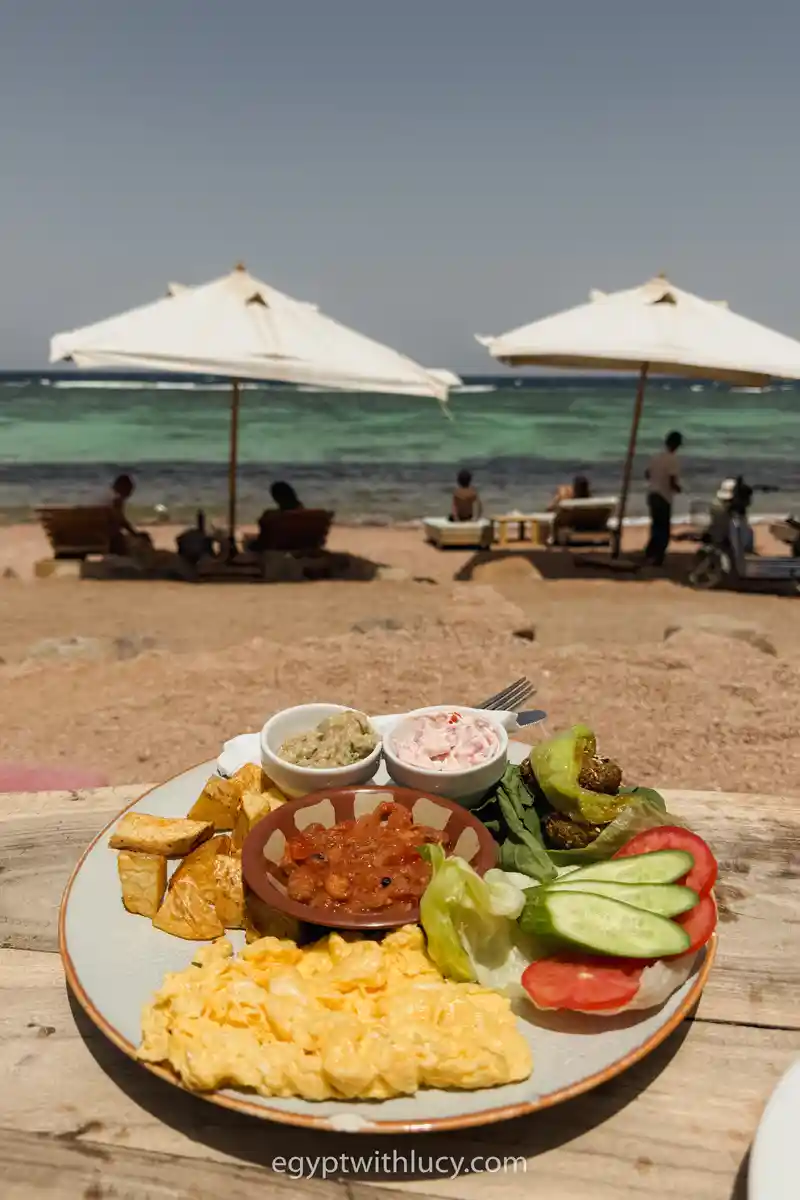
This is one of my favourite Egyptian dishes as it includes all of my favourite ingredients, and I used to order it at least once a week while living in Dahab!
It always consists of many small plates full of hearty ingredients, guaranteed to keep you stuffed for the whole day.
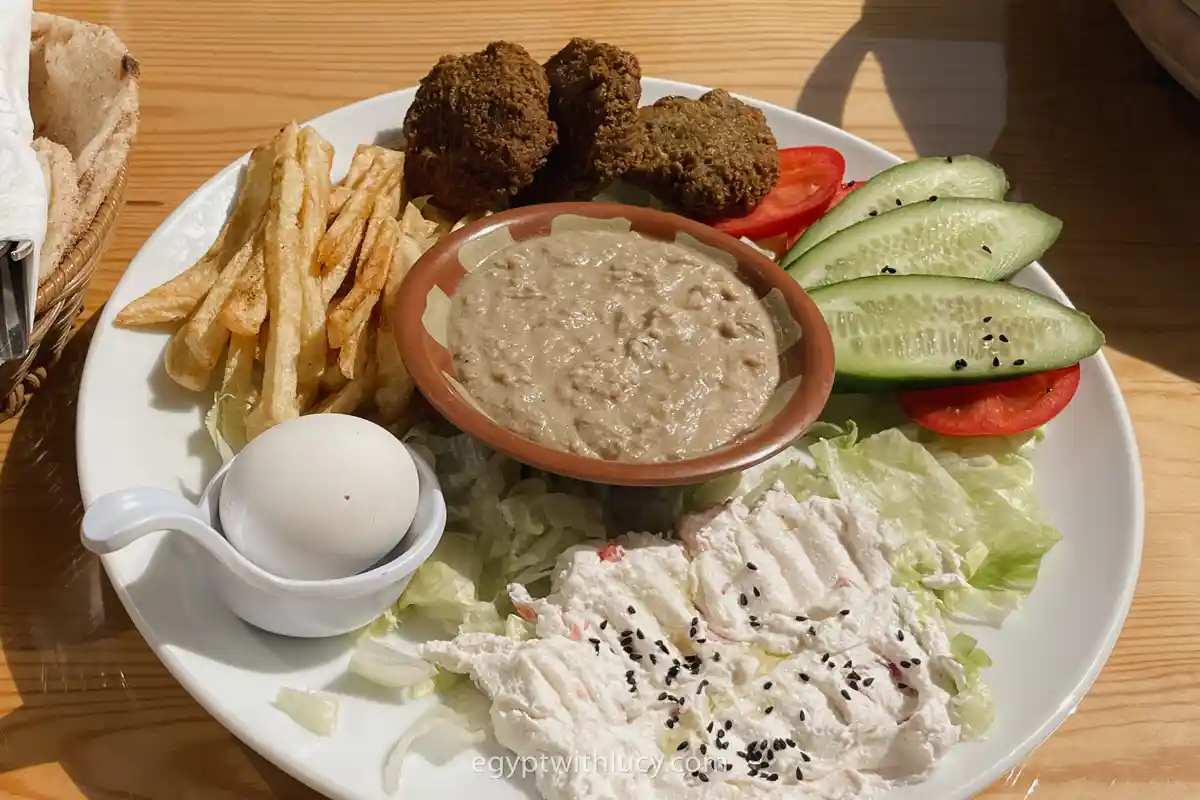
Breakfast in Egypt is normally centred around fresh bread, falafel, eggs, foul, french fries, cucumber and tomatoes, pickled vegetables, soft cheese, and olives. What’s not to love?!
This communal feast is often shared with family and friends but you can also order an individual breakfast plate in restaurants.
Most restaurants serve their own variation of this dish but my absolute favourite breakfast restaurant is in Alexandria, called Mohamed Ahmed Restaurant. And with over 15,000 Google reviews, you know it’s going to be good! First opened in 1957, they have an extensive menu with over 50 different items to choose from to create your own breakfast spread. I had to wait for 20 minutes for a table, but it’s so so worth it!
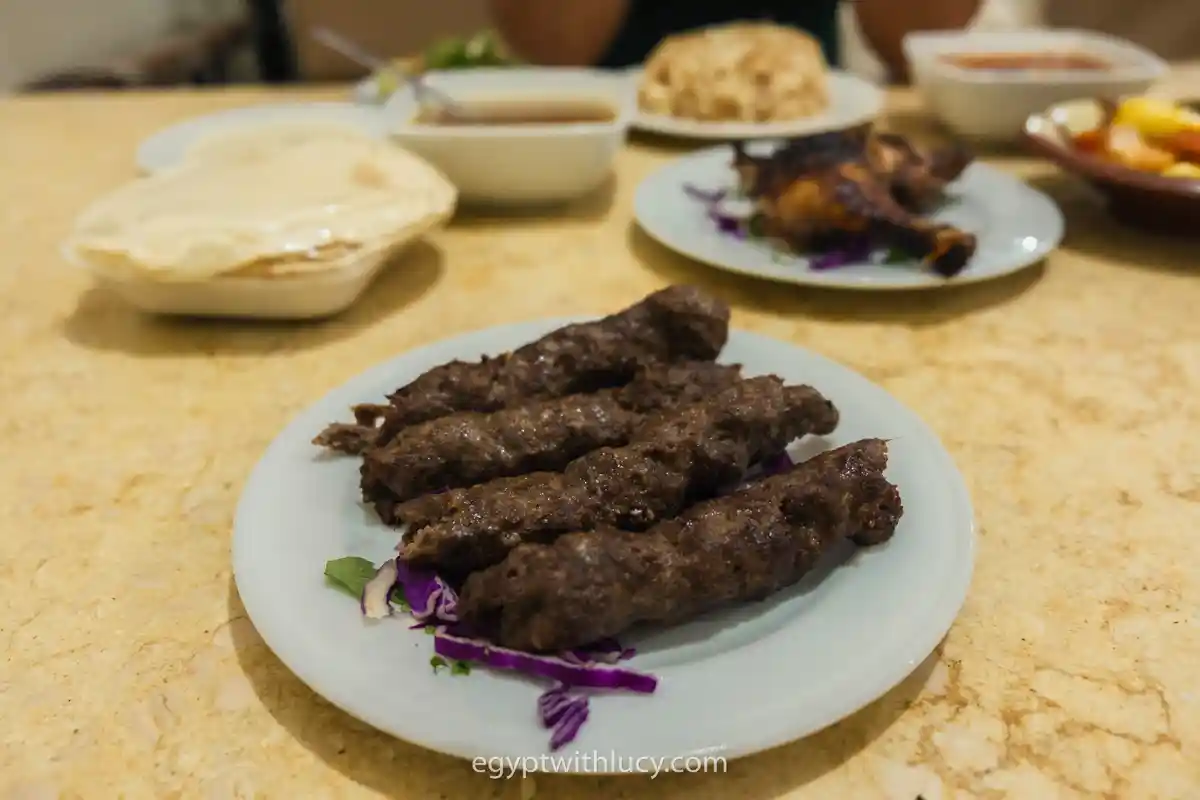
4. Grilled / BBQ Meat Spread
The amazing grilled meat restaurants in Egypt actually converted me from being mostly a vegetarian/pescatarian traveller to eating meat while staying in Dahab.
And the main reason I couldn’t resist the traditional BBQ restaurants is that they use charcoal grills for a fantastic smoky flavour and chargrilled texture. It always feels like eating a wholesome homemade meal, so it’s no surprise that grilled meat is another backbone of local cuisine.
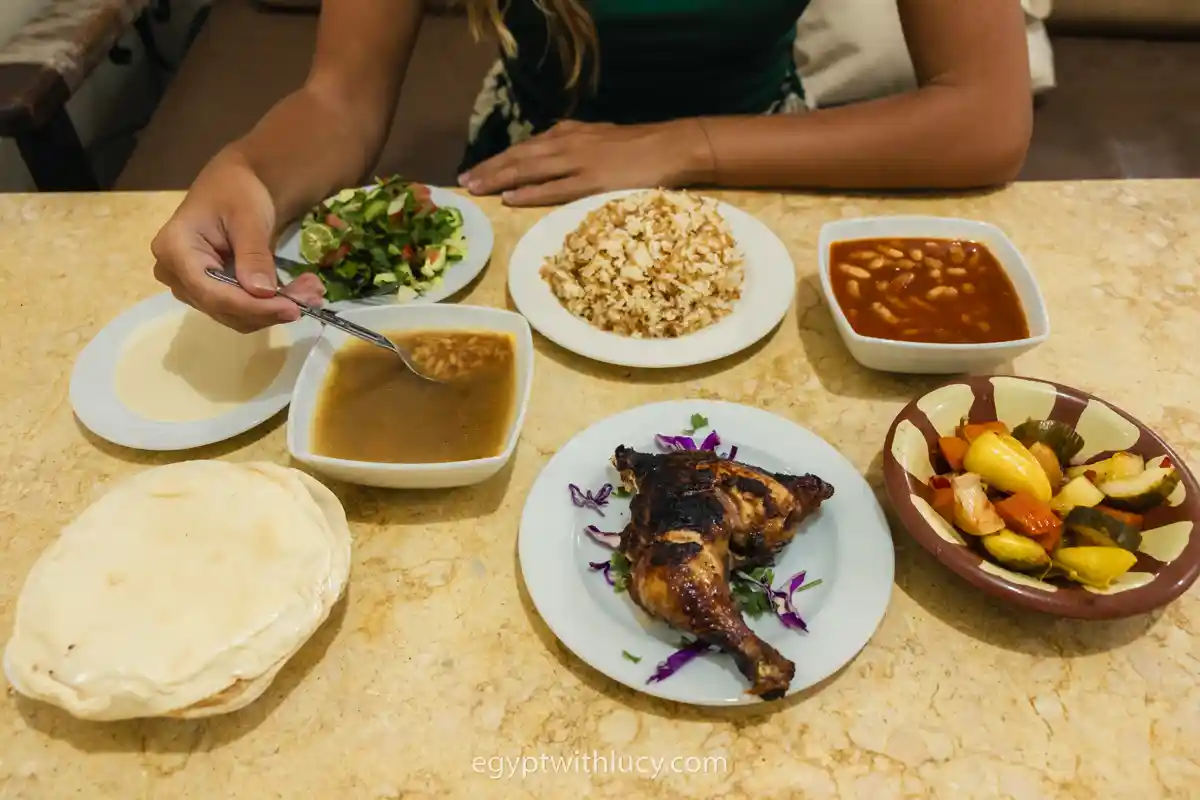
I’ve learned that when visiting one of these restaurants, it’s normal to only order your meat of choice by weight and then an array of side dishes will be included. These could range from baladi bread, basmati rice, tahini dip, and pickled vegetables.
My other favourite side dishes include orzo, okra or white bean soup, vermicelli rice, and a fresh cucumber and tomato salad. The spread of dishes is impressive and will always take up the whole table!
Chicken is always the most affordable option on the menu but here are the are other meats you’ll typically find:
- Shish tawook – boneless chicken skewers (my favourite!!)
- 1/4 or 1/2 chicken – self-explanatory (my 2nd choice)
- Kofta – spiced minced meat skewers (definitely try these!)
- Kebab – marinated grilled meat
- Tarb – kofta wrapped in lamb fat
- Pigeon – whole bird stuffed with rice (overrated as not much meat)
Lucy’s Recommendation: If you’re a vegetarian, then I’d skip this style of restaurant as meat stock is used in most of the soups.
5. Egyptian bread / Aish Baladi
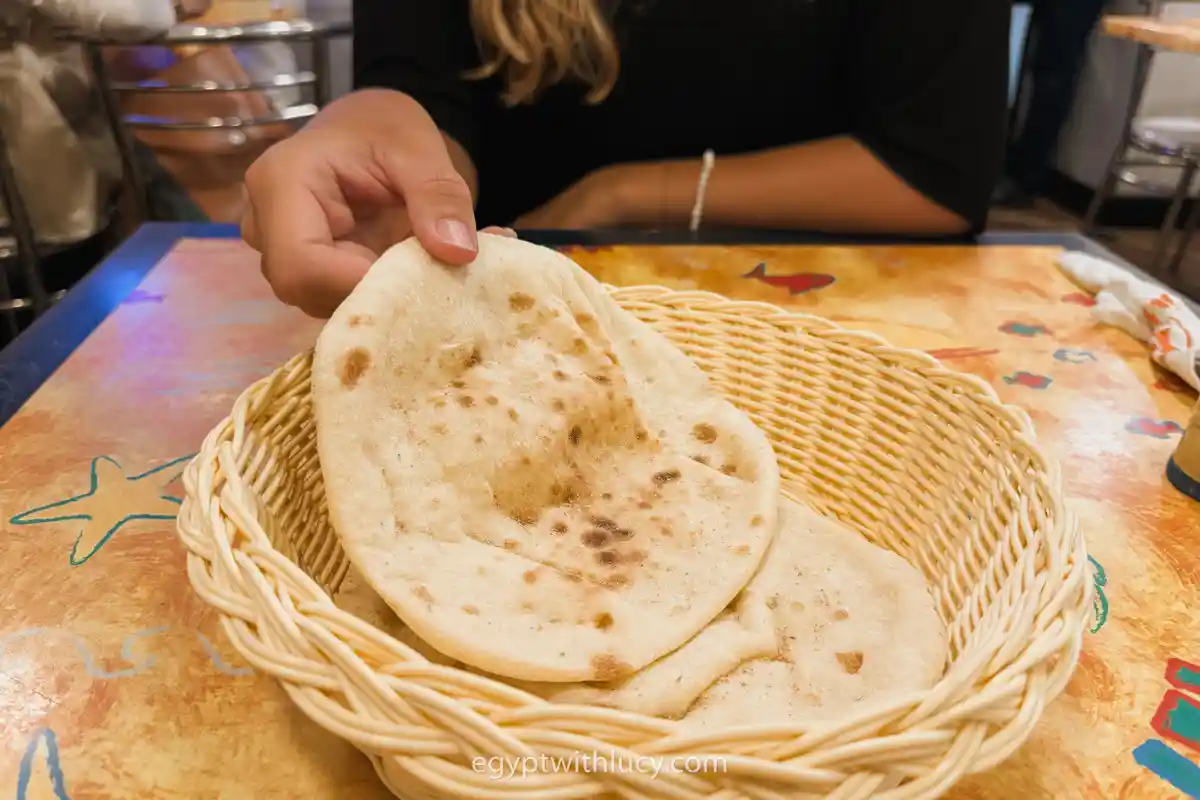
If you love bread as much as me then you’re in for a treat in Egypt!
But it’s nothing like the bread loaves we have in Scotland.
‘Aish’ literally translates as ‘life’ and it’s considered a staple in Egyptian diets. Bakeries are even subsidised by the government to keep prices affordable for everyone and this bread has even been discovered in the tombs of some Ancient Egyptian pharaohs.
Aish baladi is a round flatbread with a pocket, similar to a pita bread, but with a lighter texture. There are a couple of different varieties and sizes, but traditionally it’s made from whole wheat and covered in bran (which normally gets absolutely everywhere and sticks to everything!).
But I really love the Shamy variety, which is an elongated circle shape made with white flour and is the perfect sandwich pocket for stuffing with dips and salads.
This versatile bread is ideal as a sandwich, for dipping into hummus, and soaking up sauces.
Every meal is normally served with a stack of fresh bread, and once you get used to it, the meal feels incomplete without it!
6. Feteer / Egyptian Pie
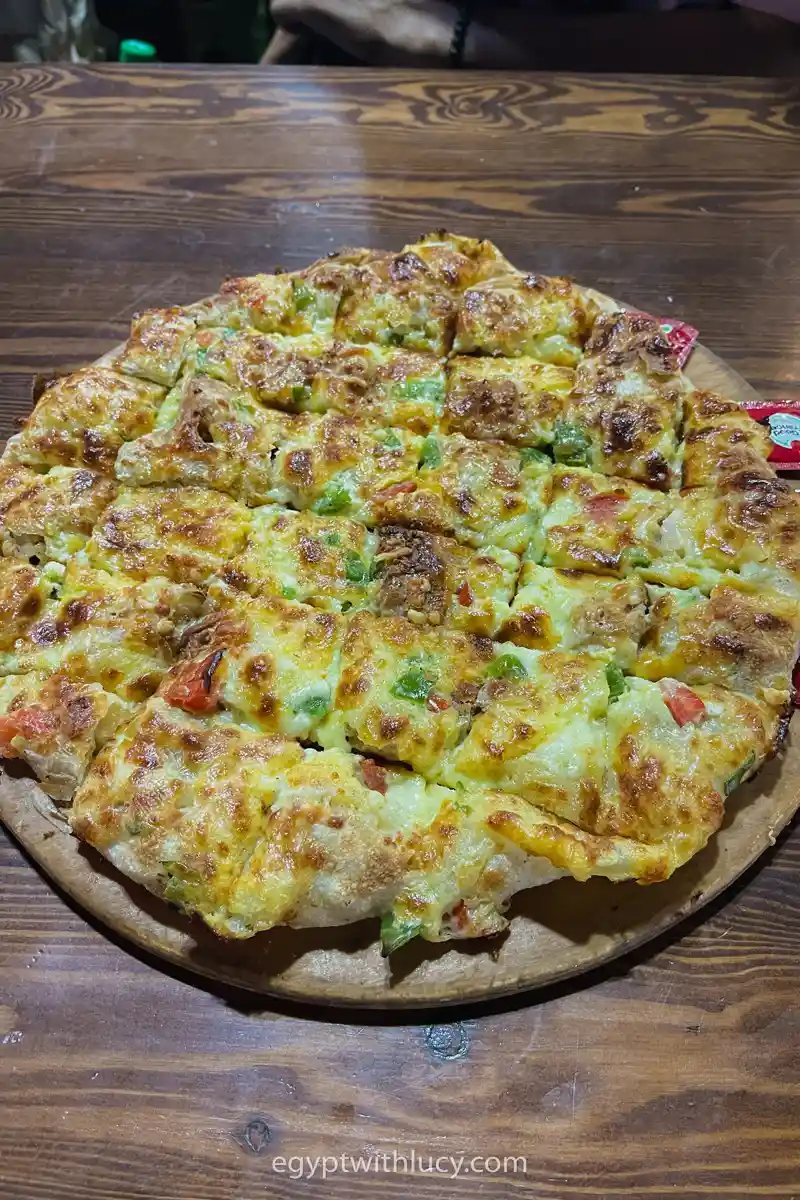
It might not be the healthiest food on my list but Feteer is my go-to when I fancy some classic Egyptian fast food. I absolutely love pastry and it’s very similar to Balkan burek, but even more buttery.
Feteer is a delicious, flaky and layered pastry that is really versatile and is always topped or filled with different ingredients. It’s crispy and delicate on the outside and rich and chewy on the inside, a combo which is just delicious!
I absolutely love the savoury variety with fillings such as minced beef or spicy chicken and cheese. My order was always a zinger or a Texas crispy pie! Basically, a feteer filled with crispy breaded chicken, stringy cheese and bell peppers.
I’ve also tried it as a dessert, and it was topped with Nutella and banana, which I highly recommend trying if you have a sweet tooth.
However, I’ll admit I’m not the biggest fan of the Feteer Meshaltet variety, which is often eaten alongside breakfast, as it’s slightly sweet and the pastry is thicker and less crispy. But most people enjoy eating this one by scooping the side dishes of molasses and honey, or cheese and olives.
Lucy’s Recommendation: Find an open kitchen where you can watch feteer being made. With a combination of throwing, tossing, and stretching the dough to over half a metre long to make it paper-thin before being carefully folded with the filling, it’s surprisingly complex and amazing to witness!
7. Hawawshi
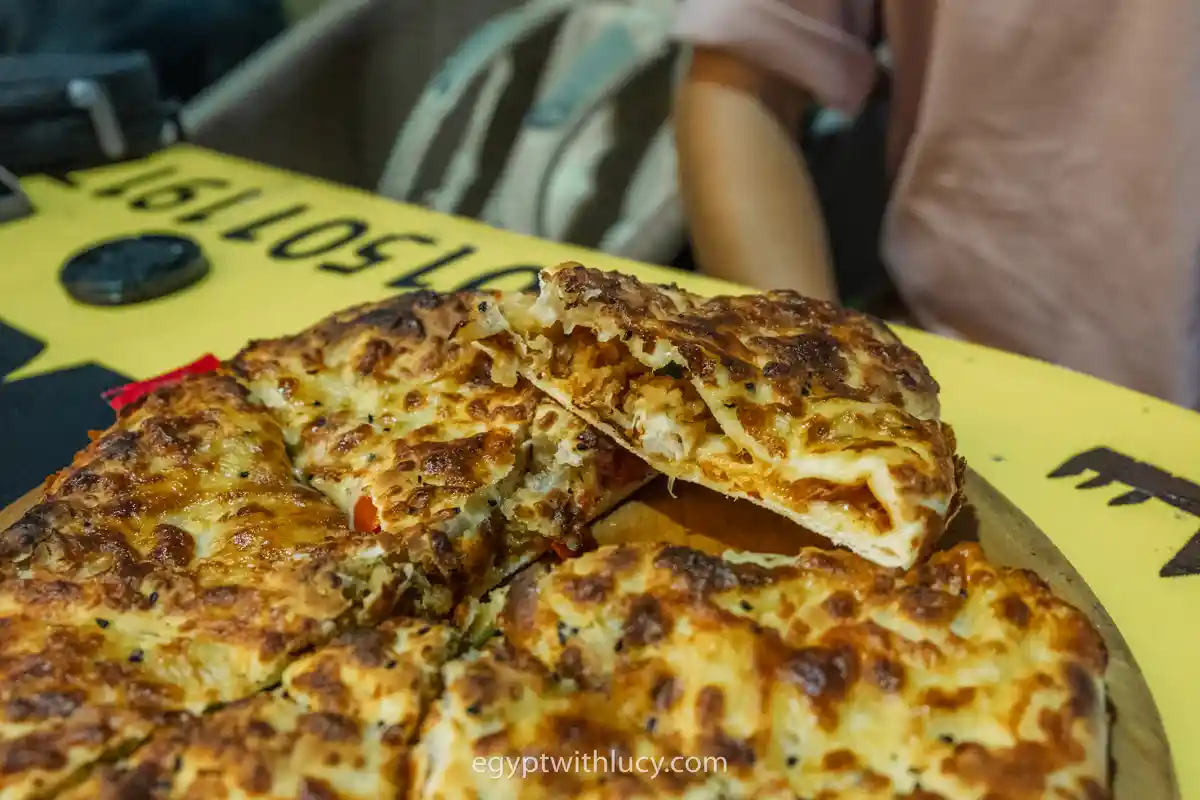
Now, imagine taking this flatbread pocket, stuffing it with spiced minced meat and frying it. And that’s exactly how to make a delicious hawawshi!
There are actually two varieties of hawawshi and the only difference is the outer casing.
The original version uses aish baladi and the Alexandrian version uses a pizza dough, which is stuffed before being baked.
I love the option to customise the Alexandrian version with different fillings like spicy chicken and cheese. I also found this dough variety more often in fast food restaurants being served alongside pizza.
I’ve tried both (more than I want to admit) and honestly, I love them both. However, the original version can be very oily at times.
This street food is normally eaten as a quick lunch or as part of casual dinner along with the classic side dishes of tahini, pickles and salad to balance the carbs and oil.
8. Foul/ Ful Medames
Foul, pronounced ‘fool’, is a slow-cooked fava bean stew and another Egyptian staple with a long history.
The beans are traditionally cooked overnight and then mashed into a paste or a smooth texture along with cumin, olive oil, garlic, lemon and other herbs. The bean mixture is always served warm and traditionally served out of a large metal jug.
In my experience, this is a really popular and affordable street food snack which is eaten in a flatbread sandwich, often along with salad and tahini (there’s a common theme here!).
I love eating foul as part of my breakfast platter as not only is it filling and nutritious but it also pairs perfectly with eggs and falafel. I also love scooping it with a side of bread or as one of the toppings in my falafel sandwiches.
However, I’ve also had it served as a side dish topped with extra olive oil and butter which I’m personally not a fan of as the greasy texture was overwhelming but this is apparently the traditional way.
9. Mahshi
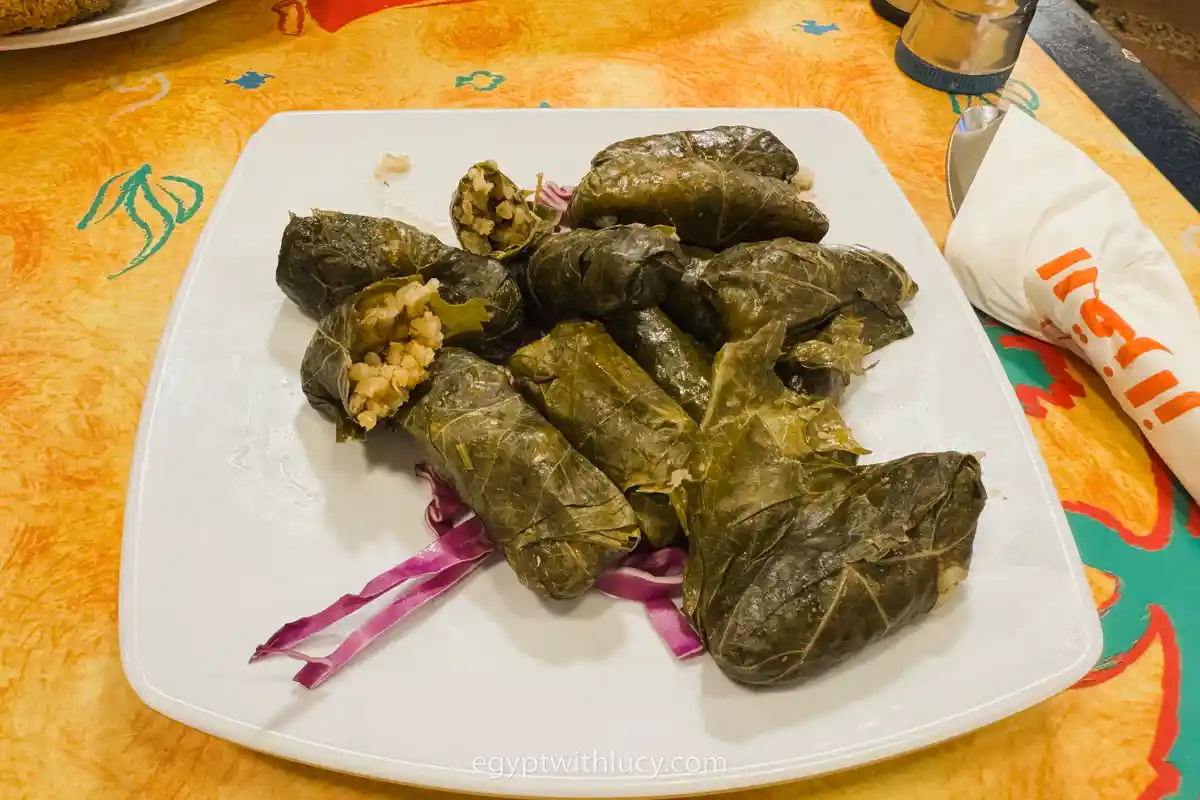
Another simple Egyptian dish that’s not to be missed is mahshi, and it’s also traditionally vegetarian.
Any vegetable that can be stuffed with herby and spiced rice is considered mahshi.
This includes cabbage leaves, peppers, courgettes, vine leaves, and tomatoes. Minced meat can also sometimes be added to the filling.
My personal favourite version of mahshi has to be the cabbage and vine leaf versions as they’re so savoury, more-ish and easy to eat!
I love eating this simple and fresh dish as either a main course or as a side dish.
Honestly, homemade tastes best, but you can find this vegetarian dish served in most restaurants.
10. Molokhia (or Mulukhiyah)
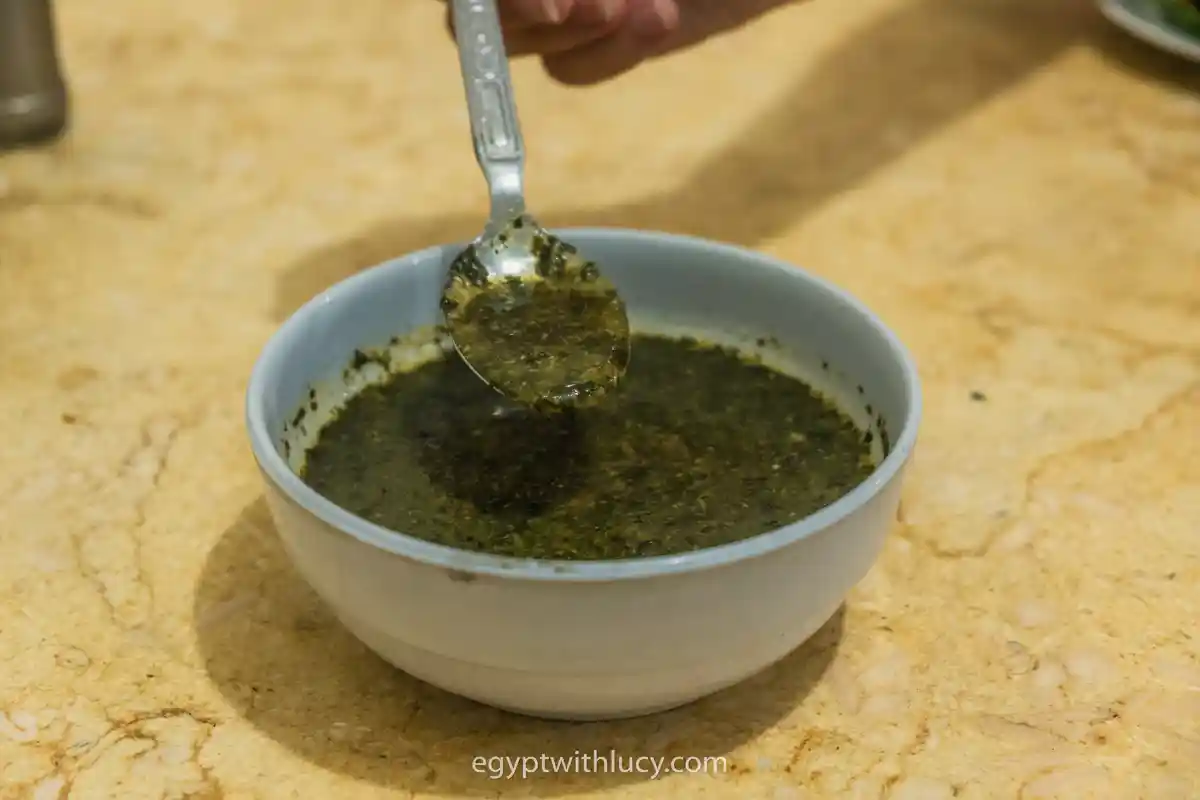
This popular soup is made from stewed jute leaves (a leafy green plant similar to spinach) along with a lot of garlic and coriander in a meat broth.
I was so intrigued the first time I saw this bright green dish being eaten by locals in Dahab. And I’ll never forget the first time I tried it, the texture was nothing like I expected!
It’s a thick, slimy and almost gelatinous consistency, which means you’ll either love it or hate it.
Honestly, I’m still deciding how I feel about it!
And don’t make the same mistake as me, as molokhia is normally eaten alongside meat and rice as a sauce, not on its own like a typical soup.
Traditional Egyptian Desserts To Try
11. Umm Ali/ Om Ali
Now it’s time for desserts!
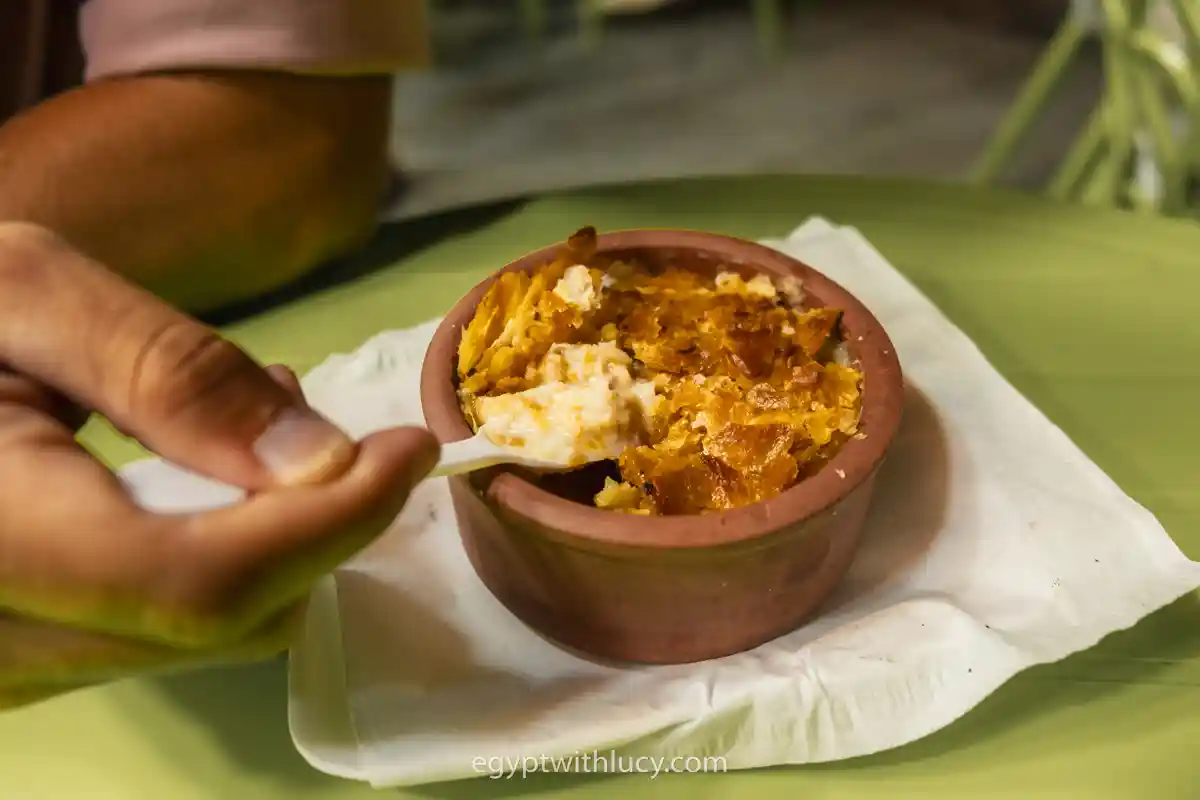
Umm Ali, meaning ‘Ali’s Mother’ is the national dessert of Egypt, and can be traced all the way back to Medieval times. Most restaurants serve Umm Ali and I love sharing it with friends after a meal.
It’s a delicious hot baked dessert made of layers of pastry or thin bread slices, soaked in a sweet milk flavoured with cardamom, vanilla and cinnamon. I absolutely love it when there are almonds, raisins and shredded coconut between the layers, which add a delicious chewy texture to each spoonful!
I feel like this is a lighter version of a British bread pudding but with thinner layers, and not as overwhelmingly sweet.
Also, I highly recommend ordering this cosy pudding in advance as it can take a while to bake in the oven.
12. Rice pudding / Roz bil Laban
For as long as I can remember I’ve been eating rice pudding and Egypt knows how to make a fantastic version.
In Egypt rice pudding isn’t baked like what I’m used to at home but instead the rice, milk, sugar, cornstarch and sometimes rose water, are boiled, mashed and then cooled.
This rich and creamy dessert is always perfectly sweet and refreshing since it’s usually served cold straight out of the fridge! I don’t think I’ve ever had a bad rice pudding in Egypt!
Traditionally, it’s eaten plain or topped with cinnamon or crushed pistachios but I really love it with a drizzle of Biscoff spread, which became my guilty pleasure in Dahab that I may have eaten a little too often!
Other Food and Drinks to Try
I couldn’t include absolutely everything on my list, so here are some other dishes and drinks I’d recommend trying during your trip to Egypt if you find them on a menu.
- Aseer Asab:Sugarcane juice
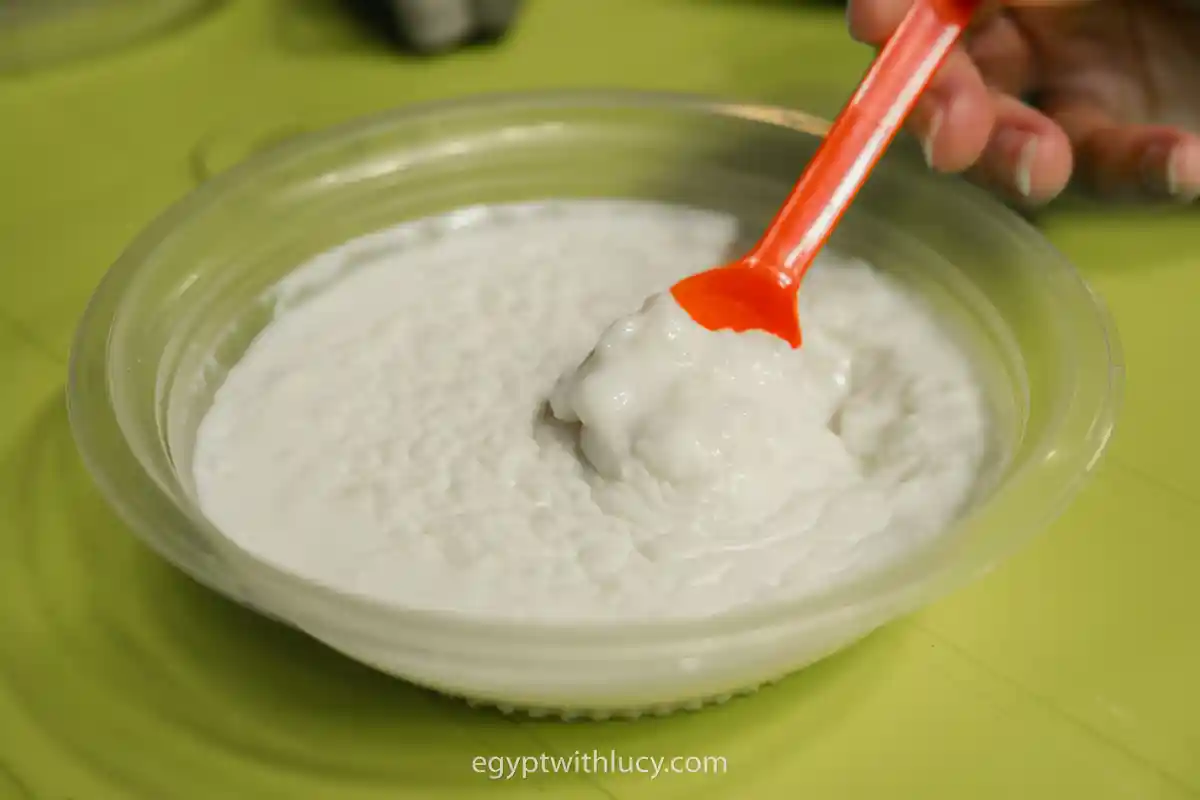
- Sahlab:Hot fragrant yoghurt drink with fruit and coconut shavings
- Zalabia:Deep-fried dough balls covered in sweet syrup or chocolate sauce
- Basbousah, kunafa, baklava:Varieties of layered pastry dessert soaked in syrup
- Shawarma:Popular meat street food with many restaurants in Downtown Cairo
- Pickled vegetables:Pickled carrots, lemons, cauliflower, olives and chilli peppers
- Macaroni bechamel:Baked pasta covered in layers of bechamel and minced meat
- Lentil soup:An upgraded version of the classic with lemon, herbs and spices
- Food Safety Tips For Visiting Egypt
Most travellers enjoy Egyptian food without any stomach issues but it’s surprisingly common to experience minor problems when visiting new countries and adjusting to new bacteria, climate and diet.
Unfortunately, I’ve been unlucky over the years and experienced food poisoning a few times during my trips to Egypt. Once I suffered after eating old lentil soup which wasn’t reheated properly but I should have known that eating lukewarm food was going to cause me problems!
So I recommend following these tips for the best possible experience.
Restaurant Tips:
- Always check recent reviews on Google.
- Visit busy restaurants (they’re empty for a reason!).
- Eat local food when possible and choose popular menu items.
- Make sure the food is hot and well-cooked.
- Wash or sanitise hands before and after using shared buffet utensils.
Tap Water:
- Do not drink tap water or brush your teeth with it.
- Make sure hot drinks are piping hot.
- Avoid raw salads as they may have been washed in tap water (if you’re very sensitive).
- Skip ice in your drinks (if the cube has a hole, then it’s safe).
Street Food:
- Eat where the locals eat and only order from busy market stalls.
- Only buy freshly cooked hot food that is prepared in front of you.
- Be aware of hygiene levels.
- Avoid food that has been sitting in the sun for a long time.
Meat and Seafood:
- Ensure meat is well-cooked.
- Avoid lukewarm buffets or if it’s been sitting for a while.
- Make sure the seafood on display is being stored properly (especially in hot weather).
General Hygiene:
- Always wash hands or sanitise before meals (and after handling money!).
- Avoid deserted places.
If you do get any unwanted symptoms, then remember to stay hydrated and eat simple food like rice, bread and bananas. Antinal also really helps and can be bought in a pharmacy for as little as 60 EGP.
Which Egyptian Dishes Will You Be Trying?
There are so many interesting and unique dishes to try during your trip in Egypt and I hope you enjoy them as much as I do!